
TL;DR
A Glamour UK report outlines professional makeup artists’ method for applying foundation with a sponge: use a clean, slightly damp sponge and build coverage in light layers. The artists say tapping helps blend foundation while preserving coverage, but the technique and finish can vary by product and personal preference.
Glamour UK has published a guide to applying foundation with a makeup sponge, drawing on advice from celebrity makeup artists Christian Briceno, Tim Quinn and Kasey Spickard. Their method centers on using a clean, slightly damp sponge to press foundation into the skin in thin layers, a technique they say can help create a blended, softer-looking finish.

Get beauty and skincare favorites delivered free with Prime
- Fast, free delivery on millions of items
- Prime Video, Amazon Music and more included
- Member-only deals all year
The guide recommends beginning with a few drops of foundation on the back of the hand, rather than applying it straight to the face. Quinn says this makes it easier to control the amount of product. He suggests using a foundation brush to place small dots of product around the centre of the face, then working outward. The brush is used to distribute the foundation before the sponge blends it.
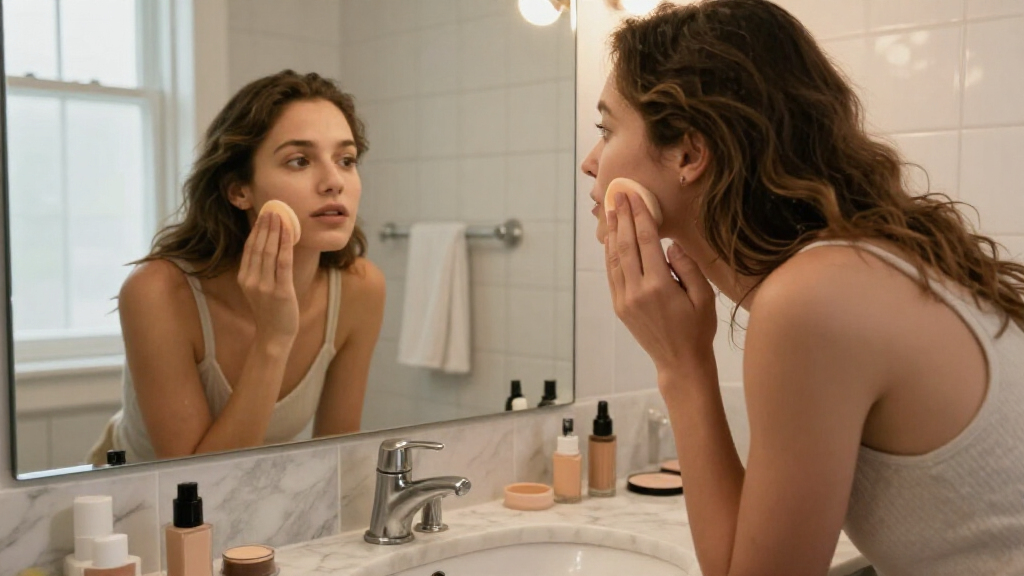
For the sponge step, the report advises wetting the sponge, squeezing out excess water and pressing it in a clean towel so it is damp, not saturated. Use its rounded end to pick up foundation and tap or bounce it over the skin. Spickard recommends a bouncing or stippling motion, with additional light layers where more coverage is wanted. The pointed end can reach around the nose and beneath the eyes, while remaining product can be blended along the jawline and hairline.
The artists’ advice is to apply less product in areas that need little coverage rather than aiming for an identical layer across the whole face. The guide says to use concealer for areas needing fuller coverage, then finish with setting powder and setting spray. Briceno describes the sponge’s value as helping him work in thin layers, soften differences in coverage and lift excess product without disturbing the rest of the makeup.
Why Thin Layers Matter
The technique offers readers a practical way to control how much foundation sits on the skin. Building coverage gradually can make it easier to keep some areas lighter while adding product only where desired. The guide frames this as a way to achieve a more seamless, natural-looking result, rather than promising a particular wear time or outcome for every user.
It also clarifies that tools can change the appearance of a base. Quinn says a sponge can soften and blend foundation, while Briceno values it for working with thin layers and lifting excess. These are the artists’ professional assessments, not evidence that a sponge is better for every skin type, formula or makeup preference. A brush, fingers or sponge may suit different needs, and the report does not establish one universally superior method.
Products Worth Considering

Philips Sonicare DiamondClean 9500 Electric Toothbrush, Black, with 3 Brush Heads

Garmin Forerunner 965 GPS Running and Triathlon Smartwatch, 47 mm, Black/Powder Gray

Oral-B iO Series 7 Rechargeable Electric Toothbrush, Black, with 2 Brush Heads and Charging Travel Case
As an affiliate, we earn on qualifying purchases.
The Artists’ Sponge Method
The Glamour UK article presents sponge application as a sequence: dispense foundation onto the hand, place it on the face with a brush, blend it with a damp sponge, then add coverage as needed. It distinguishes this approach from using a sponge to spread a large amount of foundation all at once. The emphasis is on controlled placement and tapping, rather than rubbing the product across the face.
The report identifies liquid foundation as a suitable pairing for this method and mentions several products, but its central advice is about application rather than a product test. It also cautions against using a dry sponge for the soft finish described by the artists. Quinn notes that a dry sponge can be useful when more concentrated coverage is wanted, while saying a damp one can produce a softer effect. The article does not provide comparative testing of tools or formulas.
““They let me work with very thin layers, soften transitions between areas with more and less coverage, and gently lift excess product without disturbing the rest of the makeup.””
— Christian Briceno, celebrity makeup artist
Limits of the Application Advice
The supplied report does not specify its publication date, nor does it present a controlled comparison of sponges, brushes and fingers. Its comments about a soft finish and lasting makeup are artist guidance and professional opinion; results may differ with foundation formula, skin and application technique. The article does not establish that sponge application will prevent cracking or fading for every wearer.
The excerpt also does not provide detailed cleaning instructions or a recommended replacement schedule for sponges. It does advise starting with a clean sponge to limit bacteria buildup. Readers should follow the care guidance for their particular tool and avoid sharing makeup applicators.
How to Try the Technique
The report’s next step for readers is to try the method with a clean, slightly damp sponge: place a small amount of foundation on the hand, distribute it with a brush, then tap it into the skin and add coverage selectively. Finish with concealer or setting products if desired. The article does not announce a follow-up test or new product launch; it is a practical guide, and the outcome depends on the products and tools each reader uses.
Key Questions
Should a makeup sponge be wet or dry for foundation?
The artists cited by Glamour UK recommend using a sponge that is slightly damp, after squeezing out excess water. Tim Quinn says a dry sponge can be useful for more concentrated coverage, but he prefers a damp one for a softer finish.
How do you apply foundation with a sponge?
Put a small amount of foundation on the back of your hand, use a brush to place it on the face, then use the rounded end of a damp sponge to tap or bounce the product into the skin. Add thin layers only where more coverage is wanted.
Which part of the sponge should you use around the eyes and nose?
Quinn recommends using the pointed tip to reach around the nose and beneath the eyes. The larger, rounded end is used for applying foundation across broader areas.
Does a sponge give more coverage than a brush?
The report does not establish that one tool always gives more coverage. The artists describe the sponge as useful for blending thin layers and softening transitions; the result depends on the tool, formula and amount applied.
Source: glamourmagazine.co.uk