
When choosing tinted sunscreens, pick a shade that closely matches your skin tone by testing on your jawline or wrist for a seamless blend. Apply evenly with your fingertips, brush, or sponge, starting from the center of your face and working outward. Make sure the tint disappears into your skin without leaving a white cast or feeling heavy. Reapply every two hours for continuous protection, and discover more tips to perfect your sun-safe routine as you continue exploring.
Key Takeaways
- Match the tint to your skin tone by testing on the jawline or wrist for a seamless look.
- Apply tinted sunscreen evenly from the center of the face outward using fingertips, brush, or sponge.
- Ensure the tint blends into your skin without leaving a line or feeling heavy for a natural appearance.
- Reapply every two hours, especially outdoors or when sweating, to maintain protection.
- Layer under makeup or mix with foundation for added coverage and enhanced sun protection.
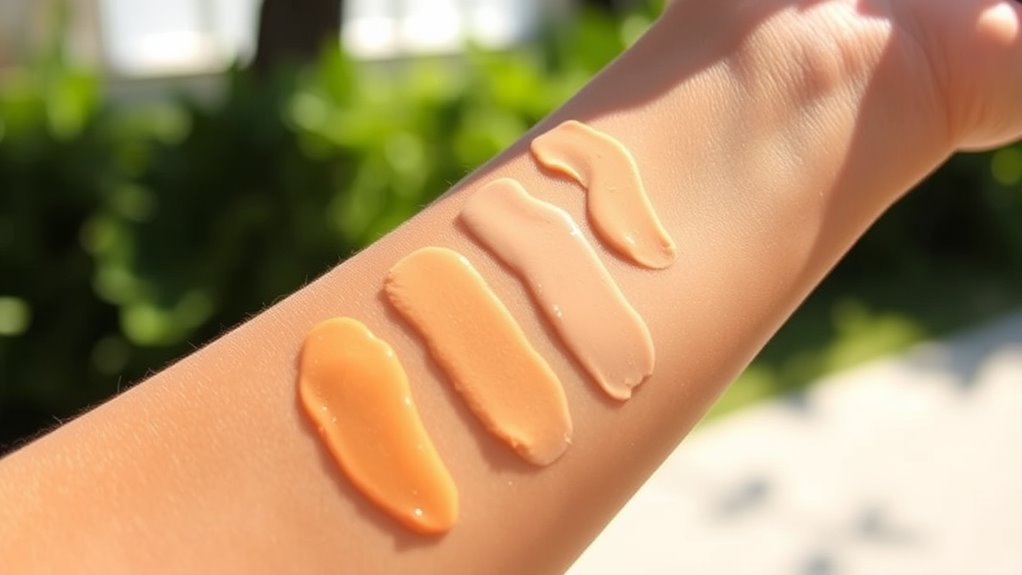
Tinted sunscreens are a popular choice for those seeking both sun protection and a touch of color to even out skin tone. They combine the benefits of traditional sunscreens with a hint of tint, making them perfect for quick, effortless coverage. When choosing a tinted sunscreen, you’ll notice it often contains either chemical filters or mineral blockers. Chemical filters, like avobenzone or octocrylene, absorb UV rays and convert them into heat that’s released from your skin. Mineral blockers, such as zinc oxide or titanium dioxide, sit on the surface, reflecting and scattering UV radiation away from your skin. Both types offer effective protection, but they function differently, so understanding their differences helps you select the best product for your needs.
Tinted sunscreens offer quick, natural coverage with chemical or mineral UV filters for effective skin protection.
Chemical filters tend to be lighter and less visible on the skin, making them a good choice if you prefer a more natural look. They often feel weightless and blend seamlessly into your skin, especially when paired with a good primer or moisturizer. Mineral blockers, on the other hand, can sometimes leave a slight white cast, but many formulas now come tinted to help blend into your skin tone more easily. This tinting not only reduces the whiteness but also enhances the aesthetic appeal, giving you a more even complexion. When applying, you’ll want to start with a clean, moisturized face. Dispense a small amount of the tinted sunscreen and use your fingertips, a brush, or a sponge to spread it evenly across your face, working from the center outward.
Matching the shade is vital for a natural look. Most tinted sunscreens offer a range of shades, so you should pick one that closely matches your skin tone. To test, apply a small amount to your jawline or wrist and check how it blends. If it disappears into your skin without leaving a line or feeling heavy, that’s probably your shade. Remember that your skin tone might change slightly with seasons, so consider adjusting your shade accordingly, especially if you notice the tint looks different over time. Additionally, choosing a tinted sunscreen with broad-spectrum protection can provide more comprehensive UV defense.
For the best results, reapply your tinted sunscreen every two hours, especially if you’re outdoors or sweating. If you’re wearing makeup, you can layer the tinted sunscreen underneath or mix it with your foundation for an added boost of protection and color correction. Keep in mind that tinted sunscreens are a convenient option for daily wear, but they shouldn’t replace your primary sun protection during prolonged sun exposure. Combining them with other sun safety measures, like seeking shade and wearing protective clothing, ensures your skin stays protected while maintaining a natural, radiant look.
Frequently Asked Questions
Can Tinted Sunscreens Replace Regular Sunscreen Daily?
Tinted sunscreens can substitute regular sunscreen daily if you choose the right shade that matches your skin tone through proper color matching. They offer added benefits like slight coverage and UV protection. Make sure to apply evenly using gentle application techniques, focusing on all exposed areas. However, check the SPF level to ensure you’re getting enough sun protection, especially during prolonged outdoor activities, to keep your skin safe.
Are Tinted Sunscreens Suitable for All Skin Types?
Tinted sunscreens tackle the task of skin tone matching and offer cosmetic versatility, making them suitable for most skin types. You’ll find they blend beautifully into different complexions, providing protection and a polished appearance. However, if you have very sensitive or specific skin concerns, it’s wise to test first or consult a dermatologist. Overall, tinted sunscreens are versatile, but personal preferences and skin sensitivities should guide your choice.
How Long Does Tinted Sunscreen Last After Application?
Tinted sunscreen typically lasts about two to four hours after application, but its durability depends on factors like sweat, water, and how much you reapply. To maintain protection, you should reapply sunscreen every two hours, especially if you’re outdoors. Keep in mind, the tint might fade over time, so regular reapplication guarantees consistent tint coverage and effective sun protection throughout the day.
Can Tinted Sunscreens Be Used Under Makeup?
Yes, you can use tinted sunscreens under makeup. They provide a good base for shade matching and help even out your skin tone. To achieve seamless color blending, wait a few minutes after applying the tinted sunscreen before adding your makeup. This step guarantees the sunscreen absorbs properly, preventing it from caking or slipping. Overall, tinted sunscreens work well as a primer, offering protection while enhancing your makeup application.
Do Tinted Sunscreens Provide Adequate UV Protection for Sensitive Skin?
Yes, tinted sunscreens can offer adequate UV protection for sensitive skin. They contain chemical filters and mineral blockers, which work together to shield your skin from harmful rays. Mineral blockers like zinc oxide and titanium dioxide provide physical barriers, ideal for sensitive skin, while chemical filters absorb UV rays. Make certain you choose a broad-spectrum tinted sunscreen with at least SPF 30 for reliable protection and reapply regularly.
Conclusion
Tinted sunscreens are like a chameleon, blending seamlessly with your skin tone while offering protection. By choosing the right shade and applying it evenly, you’ll enjoy a natural look that feels as effortless as a gentle breeze. Remember to test different shades to find your perfect match, and don’t forget to reapply regularly. With these tips, your skincare routine will be as smooth as silk, keeping your skin protected and radiant every day.