
TL;DR

Get beauty and skincare favorites delivered free with Prime
- Fast, free delivery on millions of items
- Prime Video, Amazon Music and more included
- Member-only deals all year
A Marie Claire writer says a month of using Nood’s Flasher Pro at-home IPL device left her leg hair finer and slower to grow, after she had spent $3,600 plus tip on professional treatments. That is one person’s experience, not evidence that the device will produce comparable results for everyone; IPL suitability and safety depend on skin and hair characteristics, and the report describes possible risks.
Marie Claire published a first-person review of Nood’s Flasher Pro, an at-home intense pulsed light (IPL) hair-removal device, in which the writer says her leg hair grew back more slowly and felt finer after about a month of use. The account offers a personal comparison with her $3,600 professional treatment course, but does not establish that other users will get the same results or save a similar amount.
The writer says she paid $3,600 plus tip for 16 professional sessions and was pleased with the effect on her shower routine. She had wanted to treat her legs and arms but was reluctant to spend more on clinic visits. After initially doubting at-home devices, she says she researched products and selected Nood’s Flasher Pro to try. The source describes her experience, not a controlled test comparing the device with professional treatment.
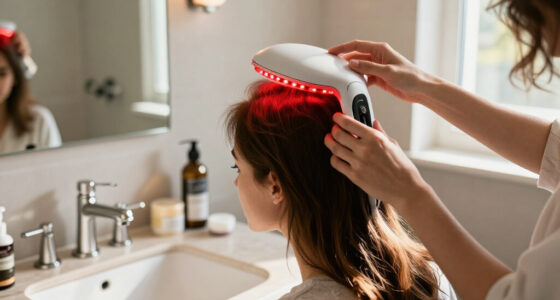
The Flasher Pro uses intense pulsed light, or IPL, which sends broad-spectrum light into the skin and heats hair follicles. The report lists the device’s output at 7 joules per square centimeter, compared with 3–6 for the cited Braun Silk Expert Pro 5 and about 20–25 for in-office equipment. Those figures describe energy output; they do not, on their own, show equivalent results or establish that one product is safer for every user.
The reviewer says she tested a small area and waited 48 hours before treating her legs. She used intensity level three, shaved beforehand and chose continuous mode; treating both legs took about 15 minutes. After several sessions, she noticed slower, finer regrowth. At roughly one month, she says she could go a week without shaving and had little stubble, although hair was still growing. The article describes a recommended schedule of treatments every three days for eight weeks, then weekly for four weeks and monthly maintenance.
What One Month of Use Shows
The review speaks to a practical choice for people weighing ongoing professional costs against the price and effort of home treatment. The writer’s earlier $3,600 bill gives that comparison a concrete scale, while her report of softer regrowth may interest readers considering treatment for larger areas such as legs. But the account does not provide the Flasher Pro’s price, a full cost comparison, or evidence that the device can replace clinic sessions.
IPL results are not universal. The report says the writer has pale skin and light-brown hair, a combination she describes as less responsive than pale skin with dark hair. It also warns that hair-removal light devices can pose risks, including burns and pigmentation changes. The review is a single user’s experience and should not be read as a guarantee of hair removal, a clinical assessment, or a substitute for following the product instructions and suitability guidance.
Products Worth Considering

Philips Sonicare 6500 Series Rechargeable Electric Toothbrush with 2 Brush Heads, White

Withings Body Smart Wi-Fi and Bluetooth Body Composition Scale

Oral-B iO Series 3 Rechargeable Electric Toothbrush for Adults, Black, 3 Modes, 2 Brush Heads and Travel Case
As an affiliate, we earn on qualifying purchases.
How IPL Fits the Comparison
The review distinguishes at-home IPL from professional laser treatment. Although the writer’s headline uses the familiar phrase “laser hair removal,” the device she tested uses broad-spectrum pulsed light. The article says IPL works by directing light toward melanin and heating hair follicles, which is why contrast between skin tone and hair color can affect suitability and effectiveness.
Dermatologist Dr. Joshua Zeichner, cited in the report, cautions that the process is better understood as hair reduction than guaranteed permanent removal. The reviewer says her own professional course involved 16 sessions, while the home device’s suggested routine involves frequent early treatments followed by maintenance. The source does not report long-term results from the home device or a head-to-head clinical comparison.
“It really should be called laser hair reduction.”
— Dr. Joshua Zeichner, dermatologist, as quoted in Marie Claire
Results and Safety Still Vary
The reported improvement is based on one reviewer’s experience over about a month. The source does not establish how lasting the change will be, whether it will continue with the recommended maintenance schedule, or how outcomes compare across different skin tones, hair colors and body areas. It also does not provide a controlled comparison with professional treatment or independent test results for this specific user experience.
The article says IPL tends to work best when skin and hair have strong color contrast and may be less effective on blonde or red hair; it warns against use for people with deep or dark skin tones and blonde, red or gray hair. The review mentions FDA clearance but does not specify the clearance details. Readers should check the manufacturer’s current instructions and eligibility guidance; anyone uncertain about suitability or with relevant skin concerns should consult a qualified professional. The article also describes risks of injury, burns and unwanted pigmentation, so careful use cannot be assumed to eliminate them.
Maintenance and Longer-Term Results
The review’s stated routine calls for treatment every three days for eight weeks, weekly sessions for the next four weeks and monthly maintenance afterward. The writer’s account covers only about one month, so it does not say whether her results continued through that schedule or how often treatment was needed later.
Readers considering the device should review its instructions, confirm that their skin and hair are appropriate for IPL and follow the recommended test-spot process. The source provides no additional trial results, independent follow-up or confirmed update on the reviewer’s longer-term outcome. Whether the device will reduce a user’s need for professional sessions remains an individual question, not a result established by this report.
Key Questions
What did the Marie Claire reviewer report?
After about a month using Nood’s Flasher Pro, the writer said her leg hair grew back more slowly and felt finer. Hair was still growing, and the result is a personal account rather than a guarantee.
Is the Flasher Pro a laser device?
The report says it uses intense pulsed light (IPL), not the same kind of equipment used for professional laser treatment. The article uses “laser hair removal” as a familiar general description but explains the device’s IPL method.
How much did the reviewer spend on professional treatments?
She reports paying $3,600 plus tip for 16 sessions. The source does not give a full comparison of that expense with the Flasher Pro’s purchase price and long-term use costs.
Who may not be a suitable candidate for IPL?
The article says IPL may be less effective on blonde or red hair and warns against use for people with deep or dark skin tones, as well as blonde, red or gray hair. Suitability can depend on the device and the individual, so users should check its guidance and seek professional advice if unsure.
What risks does the review mention?
The report describes possible burns, injury and pigmentation changes. It recommends reading the instructions and testing a small area before broader use; those steps do not remove all risk.
Source: marieclaire.com