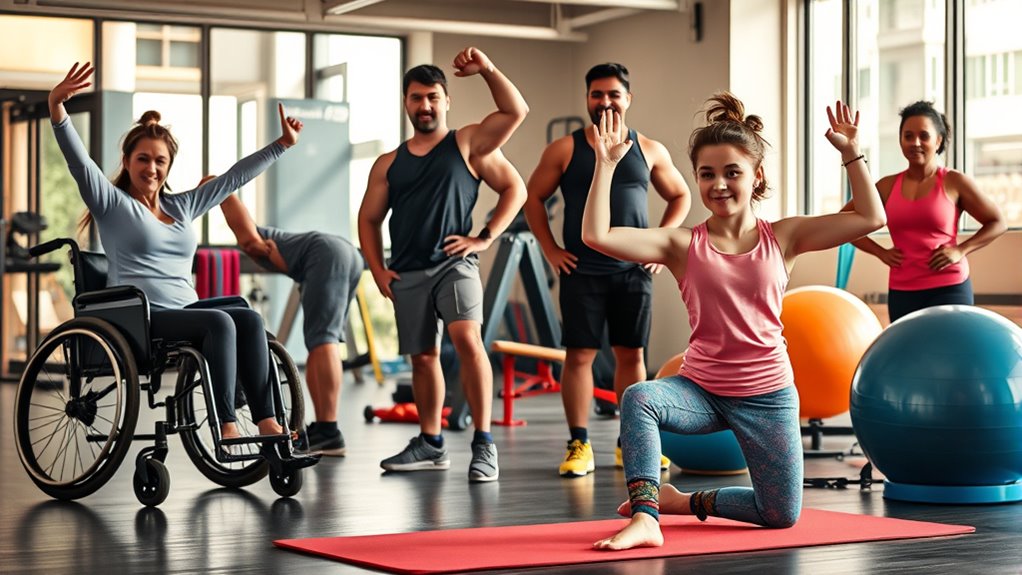

To design workouts for every body type, focus on personalization by adjusting exercises to match your fitness level, any injuries, and personal goals. Incorporate modifications like low-impact activities, seated exercises, or resistance bands to suit mobility. Focus on safe, functional movements that support your daily life. Emphasize inclusive strategies that celebrate progress and guarantee comfort. Want to discover how to create effective, adaptable routines that truly fit you? Keep exploring ways to make fitness work for your unique body.
Key Takeaways
- Personalize workouts based on individual fitness levels, injuries, and goals to ensure safe and effective exercise routines.
- Incorporate modifications and adaptive equipment to accommodate different body types, abilities, and mobility levels.
- Focus on functional movements and low-impact options like swimming or cycling for inclusive fitness experiences.
- Educate on safe exercise techniques and encourage consulting adaptive fitness professionals for tailored guidance.
- Promote confidence and sustainability by celebrating progress and adjusting routines to suit each person’s unique needs.
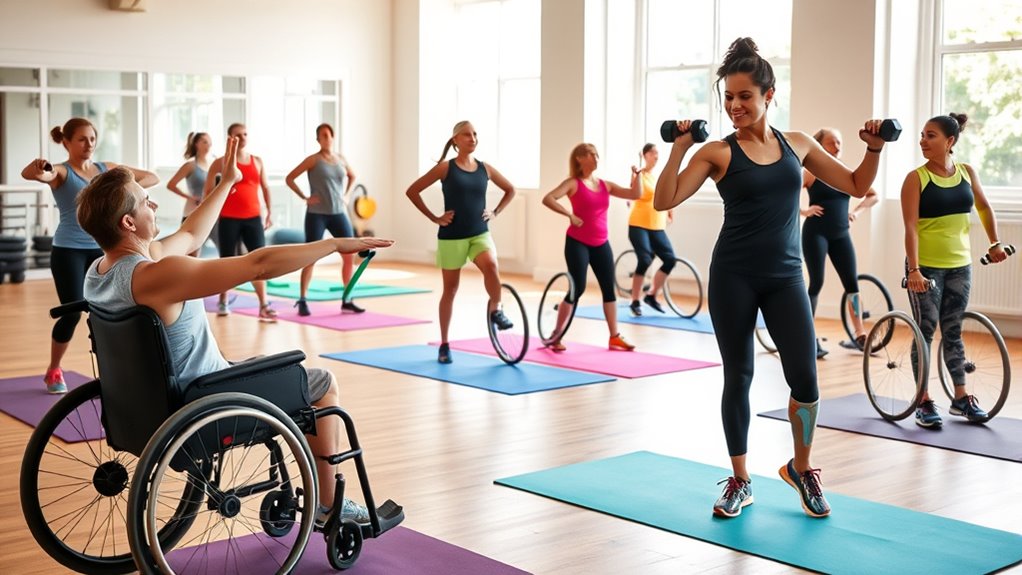
Have you ever wondered how some people consistently stay healthy despite changing schedules or physical limitations? The secret often lies in how they adapt their workouts to fit their bodies and lifestyles. Adaptive fitness is all about creating personalized modifications and inclusive exercise strategies that make fitness accessible and effective for everyone. It’s not about a one-size-fits-all approach; it’s about listening to your body and tailoring your workouts to meet your unique needs.
When designing a workout plan, you should consider your current fitness level, any injuries or limitations, and your personal goals. Personalized modifications are key here. For example, if you have joint pain, replacing high-impact activities like running with low-impact options such as swimming or cycling can reduce strain while still providing a solid workout. For those with limited mobility, seated exercises or resistance bands can be just as beneficial as traditional weightlifting. The goal is to find movements that challenge you without causing discomfort or injury. This approach not only helps prevent setbacks but also boosts confidence, encouraging you to stick with your routine.
Inclusive exercise strategies mean creating workouts that accommodate diverse body types, ages, and abilities. It’s about fostering an environment where everyone feels empowered to participate. For instance, offering modifications for yoga poses or strength exercises ensures that beginners, seniors, or individuals with disabilities can engage fully. Using adaptive equipment or adjusting the intensity and duration of exercises makes workouts more accessible. It’s also helpful to focus on functional movements—those that improve daily activities—so your fitness routine directly supports your everyday life.
A key part of inclusive strategies involves education and encouragement. Learning how to modify exercises safely and effectively can make a big difference. Watching tutorials, consulting with trainers experienced in adaptive fitness, or joining supportive groups can provide guidance and motivation. Remember, progress might look different for everyone, and that’s okay. Celebrate small victories, whether it’s improved flexibility, increased strength, or simply feeling more energized. The most important thing is consistency and making your workouts a positive experience tailored to your needs.
Ultimately, adaptive fitness empowers you to take control of your health regardless of physical limitations. By incorporating personalized modifications and inclusive exercise strategies, you ensure that your fitness journey is sustainable, enjoyable, and effective. It’s about respecting your body’s unique shape and capabilities while pushing yourself safely toward your goals. Recognizing the importance of regulatory compliance ensures that your fitness practices stay safe and within legal guidelines. With this mindset, staying healthy becomes a realistic and inspiring pursuit—one that adapts to you, not the other way around.
Frequently Asked Questions
How Do I Identify My Body Type for Workout Design?
To identify your body type for workout design, start with a body type assessment. Examine your natural physique, noting if you have a lean, muscular build (ectomorph), a more rounded, softer frame (endomorph), or a balanced, athletic shape (mesomorph). This helps you tailor workout personalization, focusing on exercises that suit your body’s strengths and needs. Understanding your body type guarantees you create effective, personalized fitness routines.
Can Adaptive Fitness Prevent Injuries Effectively?
Ever wondered if adaptive fitness can truly prevent injuries? It definitely can when you focus on personalized safety and injury prevention. By tailoring workouts to your body’s needs and limits, you reduce strain and avoid overexertion. Adaptive fitness emphasizes proper form, gradual progress, and mindful movement, making it highly effective for injury prevention. Isn’t it better to work smarter and safer rather than risking setbacks?
What Equipment Is Best for Different Body Types?
You should choose equipment based on your body type to optimize workout effectiveness and safety. For instance, lighter weights or resistance bands work well for smaller frames, while larger individuals might benefit from machines providing better support. Equipment selection allows for tailored workout modifications, reducing injury risk. Focus on adjustable options, like dumbbells or benches, so you can customize exercises to your needs, promoting a safer, more effective fitness routine.
How Often Should I Adjust My Workout Plan?
Don’t wait until you hit a wall; progress tracking is your best navigator. You should revisit your workout plan every 4 to 6 weeks, or when progress stalls. This keeps your motivation strategies fresh and effective. By regularly adjusting, you stay challenged and prevent plateaus. Listen to your body and celebrate small wins, ensuring your fitness journey stays lively and aligned with your evolving goals.
Are There Specific Diets That Complement Adaptive Fitness?
Yes, certain diets complement adaptive fitness well. Focus on meal timing to fuel your workouts and aid recovery, eating carbs before and protein after exercises. Maintain a good macronutrient balance—carbohydrates, proteins, and fats—to support your body’s needs. A personalized approach guarantees you get enough energy and nutrients, helping you optimize workout results and adapt your fitness plan as your body changes.
Conclusion
Why settle for generic workouts when you can tailor them to your unique body? Adaptive fitness empowers you to design routines that suit your needs, helping you reach your goals more effectively. By understanding your body type, you can avoid injury, boost motivation, and see real progress. Isn’t it time you took control of your fitness journey and made it truly yours? Start customizing today and activate your full potential—because everyone deserves a workout that works for them.