
A strong sense of community plays a crucial role in your personal wellness by offering emotional support, practical help, and social connections that boost mental and physical health. Being involved in community activities can reinforce your sense of purpose and belonging, while shared resources and encouragement motivate healthy lifestyles. When you feel supported and connected, you’re more resilient during tough times. Exploring how community impacts wellness can reveal ways to strengthen your overall health and happiness.
Key Takeaways
- Community provides emotional support and shared resources that enhance individual mental and physical health.
- Active participation in community activities fosters a sense of purpose and belonging, promoting wellness.
- Community networks offer practical help and access to health programs during challenging times.
- Shared experiences in community settings reduce stress and loneliness, improving mental health.
- Being embedded in a supportive community creates a safety net that strengthens resilience and overall well-being.
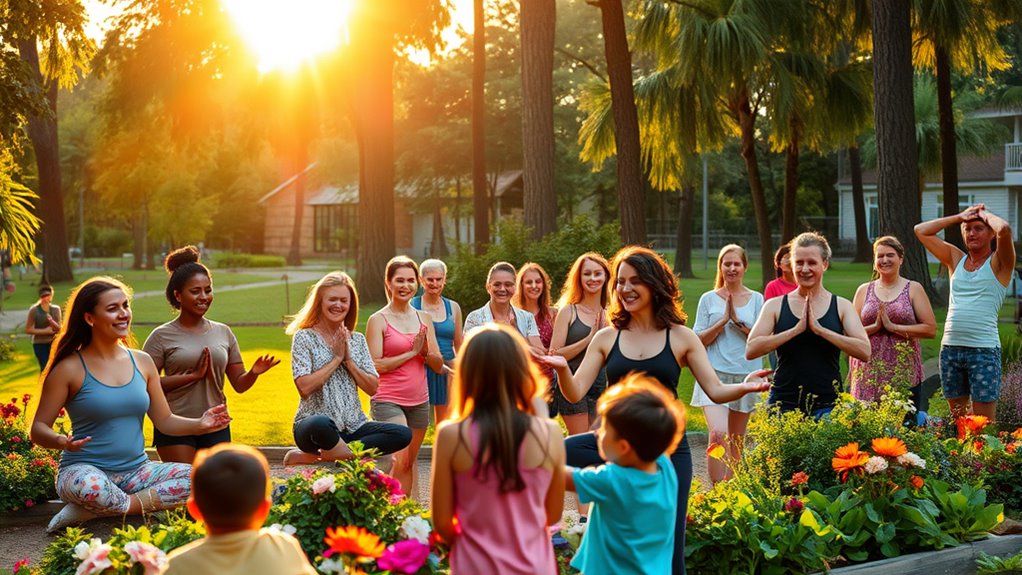
Community and personal wellness are deeply interconnected, with a strong sense of community often serving as a foundation for individual health and happiness. When you feel connected to those around you, you gain access to a support network that can help you navigate life’s challenges. This network is more than just friends or family; it’s a web of shared resources, experiences, and encouragement that bolster your resilience and sense of belonging. Being part of a community means you’re not facing struggles alone. Whether it’s emotional support during tough times or practical help when you need it, having people who understand your situation makes a significant difference in your overall well-being.
A strong community provides you with shared resources that extend beyond emotional support. These might include local health programs, educational workshops, or even simply information about healthy living. When you tap into these shared resources, you can make more informed decisions about your health and wellness. For example, community centers often offer free fitness classes or mental health support groups that you might not access on your own. Sharing resources also means pooling collective knowledge and skills, which can lead to innovative solutions for common health issues. You might find a neighbor who’s a nurse or a fitness enthusiast willing to share advice, tips, or even workout routines. This informal exchange builds a sense of trust and cooperation that benefits everyone involved.
Moreover, participating in community activities reinforces your sense of purpose and connection, which are crucial for mental health. When you contribute to community projects or volunteer, you’re not only helping others but also strengthening your own sense of worth and belonging. The mutual support nurtured through these shared experiences helps you develop resilience against stress, anxiety, and loneliness. It’s easier to stay motivated and committed to your wellness goals when you’re surrounded by a community that encourages your progress. Additionally, engaging in shared activities can inspire a sense of collective responsibility that motivates healthier behaviors and lifestyles.
In addition, communities often create a safety net that catches you during difficult times. When you face illness, financial hardship, or personal loss, the collective strength of your community can provide comfort and practical help. Knowing that you’re part of a support network reassures you that you’re not alone in facing life’s uncertainties. This interconnectedness fosters a sense of security, which is essential for maintaining good mental and physical health. Ultimately, your personal wellness flourishes when you’re embedded in a community that offers shared resources, emotional support, and opportunities for growth. It’s a symbiotic relationship—your well-being benefits from the community, and your active participation helps strengthen the community’s fabric.
Top picks for "role community personal"
Open Amazon search results for this keyword.
As an affiliate, we earn on qualifying purchases.
Frequently Asked Questions
How Can Virtual Communities Impact Personal Wellness?
Virtual communities can positively impact your personal wellness by providing digital support and peer encouragement. When you join online groups, you gain access to others who understand your struggles, offer advice, and motivate you to stay committed to your goals. This sense of connection reduces loneliness and boosts your mental health. By engaging regularly, you strengthen your resilience and develop healthier habits, making your wellness journey more manageable and fulfilling.
What Role Do Community Leaders Play in Promoting Wellness?
Think of community leaders as guiding stars in a vast sky, illuminating paths to wellness. Your leaders influence with their leadership influence, inspiring others to prioritize health and balance. Through community engagement, they foster trust and collective effort, creating an environment where personal well-being thrives. Their role is essential—they motivate, support, and unite members, ensuring everyone feels empowered to take steps toward healthier, happier lives.
How Do Cultural Differences Influence Community Wellness Initiatives?
Cultural differences shape how community wellness initiatives succeed by influencing cultural traditions and communication styles. You might find that embracing diverse traditions fosters inclusivity, making programs more effective. Adjusting your communication style to align with cultural norms helps build trust and understanding. When you respect and incorporate cultural traditions, your wellness initiatives become more welcoming and impactful, encouraging participation and promoting a healthier, more connected community.
Can Community Involvement Replace Individual Therapy or Counseling?
Community involvement can’t substitute individual therapy or counseling, but peer support and social engagement can complement your mental health journey. By actively participating in community activities, you gain emotional connections and a sense of belonging that boost your well-being. However, for personalized treatment, professional therapy remains essential. Use community as a supportive supplement, not a replacement, to ensure thorough personal wellness.
What Are Effective Ways to Build Supportive Community Networks?
You can build supportive community networks by engaging in peer support groups and fostering local partnerships. Reach out to neighbors, join clubs, or volunteer to connect with others who share your interests and values. Attend community events and participate in local initiatives, creating a sense of belonging. These actions weave a safety net, encouraging open conversations and mutual encouragement, which are essential for personal wellness and emotional resilience.
Conclusion
Remember, your community creates comfort, connection, and confidence. By building bonds and bringing people together, you boost your brain, body, and balance. Don’t underestimate the power of partnerships; they propel your personal wellness forward. So, step outside, seek support, and strengthen your circle. Because when you nurture your network, you nurture yourself. Embrace the incredible influence of community to cultivate a healthier, happier, and more harmonious life today.