Layering with natural fibers like linen, hemp, and organic cotton boosts your style while supporting sustainability. Linen adds breathability and a timeless texture, perfect for warm weather or layered under jackets. Hemp offers durability and a rugged look that lasts for years, while organic cotton provides softness and breathability for everyday comfort. Combining these fibers creates versatile, eco-friendly outfits and home textiles that grow better over time. Keep exploring to discover how to maximize their benefits in your wardrobe and decor.
Key Takeaways
- Natural fibers like linen, hemp, and organic cotton enhance layering with their breathability, texture, and durability.
- Linen provides a crisp, elegant look and softens over time, ideal for warm weather or layered styling.
- Hemp offers exceptional strength and resistance to wear, ensuring long-lasting layered clothing and decor.
- Organic cotton adds breathable comfort and versatility, supporting sustainable and long-lasting wardrobe choices.
- Layering with these fibers promotes eco-conscious fashion, combining durability, style, and environmental benefits.

Layering with natural fibers is an effective way to add warmth, texture, and sustainability to your wardrobe or home decor. Natural fibers like linen, hemp, and organic cotton are not only stylish but also support sustainable fashion practices. When you choose these materials, you’re making a conscious decision to reduce environmental impact while enjoying their unique qualities. These fibers are known for their fabric durability, meaning your clothing and home textiles will last longer, making your investments truly worthwhile. They stand up well to regular wear and washing, which is essential when building a versatile wardrobe or creating eco-friendly home accents.
Layering with natural fibers enhances durability, style, and sustainability for your wardrobe and home.
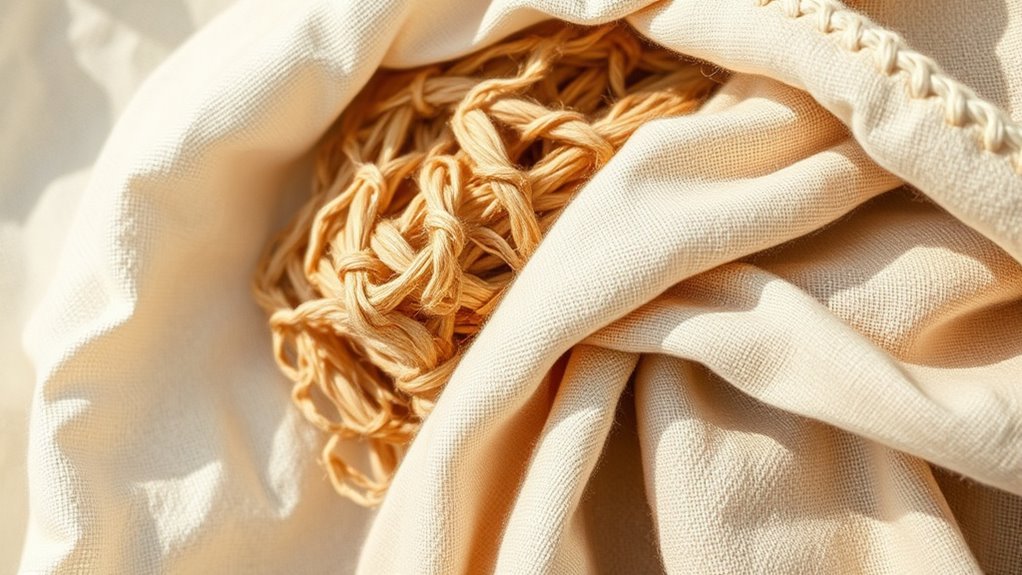
Linen, made from flax, is a timeless fiber celebrated for its breathability and natural texture. It’s perfect for layering because it adds a crisp, elegant look while offering excellent temperature regulation. Linen’s fabric durability ensures that it won’t easily fray or wear out, even after multiple washes. Its natural fibers become softer over time without losing their integrity, making it ideal for pieces you want to last and age beautifully. When layering with linen, you can comfortably wear it in warmer months or layer it under sweaters or jackets during cooler seasons. The fabric’s ability to wick moisture helps keep you comfortable, making linen a functional choice for everyday wear or home textiles.
Hemp is another versatile natural fiber that’s gaining popularity in sustainable fashion. It’s incredibly strong and durable, often surpassing other fibers in fabric durability. Hemp fabrics resist stretching and shrinking, which means your layered outfits or home decor items will maintain their shape longer. Its eco-friendly cultivation requires minimal water and no harmful chemicals, aligning perfectly with sustainable principles. When layering with hemp clothing or accessories, you add a rugged yet refined element to your style. Hemp’s natural texture provides visual interest, and its resilience ensures your pieces hold up through many seasons of use.
Organic cotton is perhaps the most familiar natural fiber, but it’s no less important in sustainable fashion. It offers soft, breathable comfort and pairs easily with other natural fibers for layered looks. Organic cotton is grown without synthetic fertilizers or pesticides, reducing environmental harm and supporting healthier ecosystems. Its fabric durability makes it suitable for everyday wear and repeated washing without losing shape or softness. When you layer organic cotton pieces, you benefit from their versatility and longevity, making your wardrobe more sustainable and cost-effective in the long run.
Incorporating linen, hemp, and organic cotton into your layering choices isn’t just about style—it’s a commitment to sustainability and quality. Their natural properties promote durability, allowing you to build a wardrobe or home decor that’s both eco-conscious and long-lasting.
Frequently Asked Questions
How Do Natural Fiber Layers Affect Indoor Air Quality?
Natural fiber layers like linen, hemp, and organic cotton improve indoor air quality by reducing airborne allergens and absorbing indoor pollutants. You’ll notice fewer allergy symptoms because these fabrics trap dust, pollen, and pet dander effectively. Plus, they don’t release harmful chemicals, ensuring cleaner air. By choosing natural fibers, you actively create a healthier environment, making your space more comfortable and safer for everyone.
Can Layering With Natural Fibers Help Regulate Body Temperature?
Layering with natural fibers acts like a gentle breeze on a warm day, helping you stay comfortable. You’ll benefit from their moisture-wicking properties and thermal insulation, which keep you cool when it’s hot and cozy when it’s cold. Natural fibers breathe with your body, adapting to temperature changes and regulating your body temperature more effectively than synthetic materials, making your comfort a constant, regardless of the weather outside.
Are Natural Fiber Layers Suitable for Sensitive Skin?
Yes, natural fiber layers are suitable for sensitive skin because they often have hypoallergenic properties and are gentle on your skin. If you have fiber sensitivity, these materials can reduce irritation compared to synthetic fabrics. Linen, hemp, and organic cotton are breathable and soft, making them a comfortable choice for layering without causing discomfort or allergic reactions. You’ll appreciate their natural benefits and skin-friendly qualities.
How Do Natural Fiber Layers Compare in Durability to Synthetic Options?
Think of natural fibers like linen, hemp, and organic cotton as the sturdy oak trees of textiles—strong and resilient. They have impressive fiber strength and wear resistance, making them durable for everyday use. While synthetic options might be like bamboo—quick-growing but less sturdy—natural fibers hold up well over time, resisting wear and tear. This means your layers stay intact longer, offering eco-friendly durability you can rely on.
What Are the Best Cleaning Practices for Layered Natural Fiber Textiles?
You should gently clean layered natural fiber textiles by avoiding harsh fabric softening chemicals that can weaken fibers. Use mild detergents and spot treat stains promptly with natural stain removal solutions like baking soda or vinegar. For best results, hand wash or use a delicate cycle, and air dry to preserve the fabric’s integrity. Regularly revitalizing the fibers helps maintain their durability and appearance over time.
Conclusion
As you layer with linen, hemp, and organic cotton, imagine wrapping yourself in soft, earthy whispers that breathe with you. Feel the gentle rustle of fibers against your skin, like a calming breeze through a sun-dappled forest. Each piece offers a natural embrace, blending comfort with sustainability. With every layer, you create a harmonious rhythm—light, breathable, and effortlessly stylish—connecting you to nature’s most authentic textures and your own mindful, flowing style.