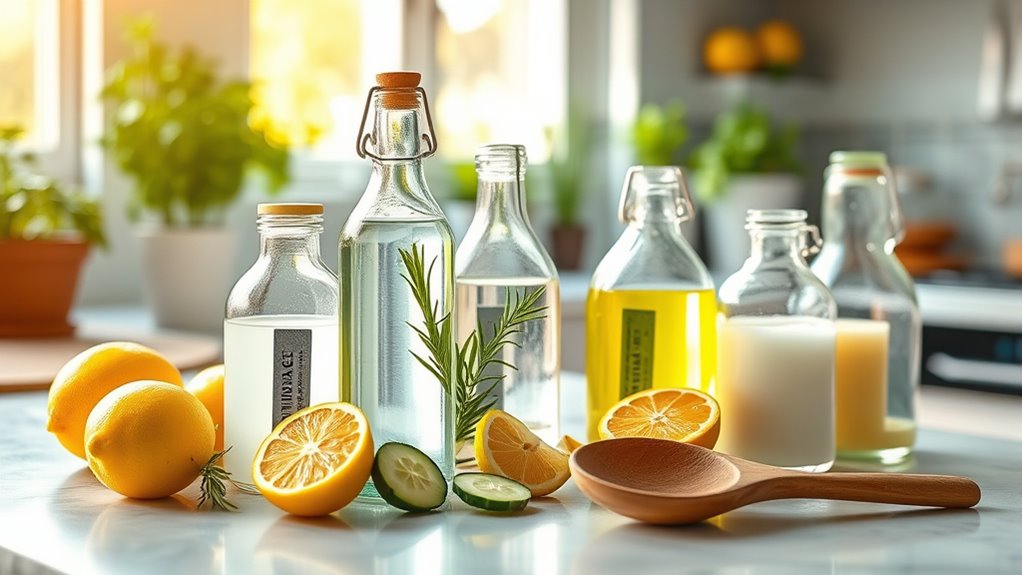
You can easily make non-toxic cleaning products at home using natural ingredients like vinegar, baking soda, lemon, and castile soap. Work in a well-ventilated area, label your solutions clearly, and keep them out of reach of children and pets. Customize your cleaners by experimenting with ingredient ratios to suit different surfaces, and recall safety tips along the way. Staying informed helps you create safe, effective cleaners — continue to discover how these ingredients can transform your cleaning routine.
Key Takeaways
- Use natural ingredients like vinegar, lemon, baking soda, and castile soap to create effective, non-toxic cleaning solutions.
- Always work in well-ventilated areas and label homemade cleaners clearly to ensure safe use and storage.
- Substitute ingredients such as lemon juice for vinegar or baking soda for commercial abrasives to customize your cleaners.
- Combine ingredients thoughtfully to prevent chemical reactions and enhance cleaning performance naturally.
- Adjust concentrations based on surface sensitivity and safety, and keep solutions out of reach of children and pets.
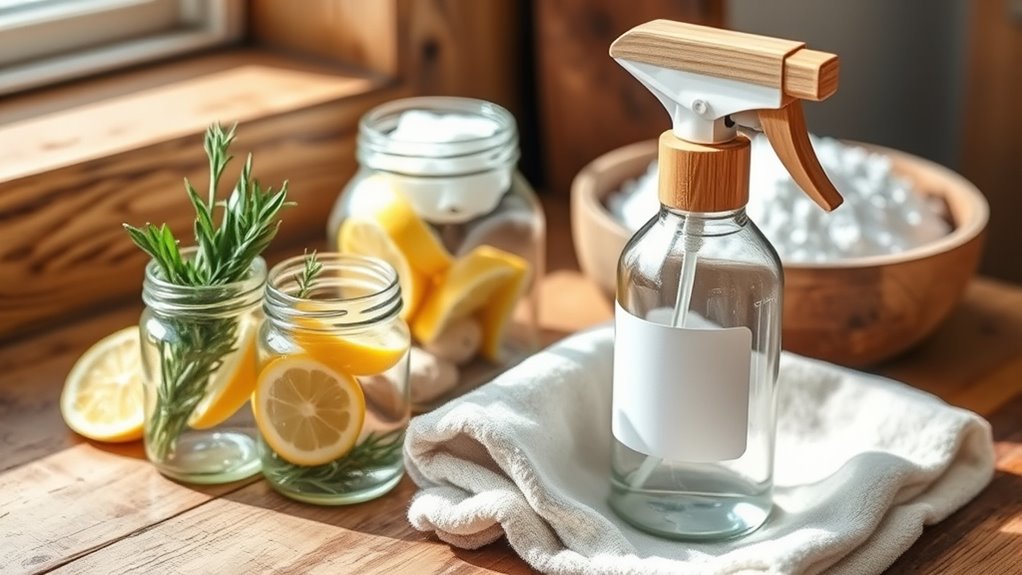
Making your own non-toxic cleaning products is a simple and effective way to keep your home fresh without exposing yourself or your family to harmful chemicals. When creating DIY cleaners, safety tips should always be your top priority. Always work in a well-ventilated area, especially when handling ingredients like vinegar or essential oils. Use gloves if you have sensitive skin, and keep your workspace organized to prevent accidental spills. Label your homemade products clearly, so you know what’s inside and avoid misuse. Additionally, store these cleaners out of reach of children and pets, as even natural ingredients can be irritating or harmful if ingested.
One of the biggest advantages of DIY cleaning solutions is the ability to make ingredient substitutions based on what you have at hand or personal preferences. For example, if you’re out of white vinegar, lemon juice can be a good alternative for its natural acidity and fresh scent. Baking soda is another versatile ingredient you can substitute for commercial abrasives when scrubbing sinks or tubs. If essential oils aren’t available, a few lemon peels boiled in water can add a pleasant aroma and some antimicrobial properties. Remember, ingredient substitutions allow you to customize your cleaning products while maintaining their effectiveness and safety. Just ensure that the substitutes you choose are compatible with each other and suitable for the surface you’re cleaning.
Creating your own non-toxic cleaners also means you can control the concentration of ingredients, avoiding any unnecessary exposure to harsh chemicals. For instance, when making an all-purpose cleaner, dilute vinegar with water to reduce its acidity if you have sensitive skin or surfaces that may be prone to damage. Using natural ingredients like castile soap, lemon, or vinegar provides a safe yet powerful cleaning experience. Be mindful of how different ingredients interact; for example, avoid mixing vinegar and castile soap directly, as they can form a curdled film. Instead, use separate solutions for different cleaning tasks or combine them carefully in a spray bottle for multi-purpose use.
Frequently Asked Questions
Are DIY Cleaning Products as Effective as Commercial Ones?
Yes, DIY cleaning products can be just as effective as commercial ones when you understand the chemical reactions involved. By carefully choosing ingredient substitutions like vinegar or baking soda, you harness natural cleaning power. While some commercial products contain harsh chemicals, your homemade versions avoid them, making them safer and eco-friendly. Just remember to follow recipes closely and test small areas first for best results.
How Long Do Homemade Cleaning Solutions Last?
Ever wonder how long your homemade cleaning solutions stay effective? Generally, they last about one to two weeks if stored properly. To maximize shelf life, keep your solutions in airtight containers, away from sunlight, and refrigerate if needed. Do you notice any change in smell or consistency? If so, it’s time to make a fresh batch. Proper storage duration and preservation tips guarantee your natural cleaners work effectively whenever you need them.
Can Natural Ingredients Stain or Damage Surfaces?
Natural ingredients can sometimes cause surface staining or damage if they’re incompatible with certain materials. For example, citrus oils may discolor or harm delicate surfaces like marble or wood. Always check ingredient compatibility before using homemade cleaners, and do a small test spot first. By understanding surface staining risks and selecting ingredients carefully, you can effectively clean without damaging your surfaces or causing unwanted stains.
Are DIY Cleaners Safe for Pets and Children?
Think of DIY cleaners as a gentle hug for your home. They’re generally safe for pets and children, but you must stay vigilant. Always prioritize pet safety by avoiding ingredients that could harm them, like essential oils or vinegar in high concentrations. Check for ingredient allergies, and test small areas first. When made thoughtfully, your natural cleaners can keep your family safe and your home sparkling clean.
What Are Common Mistakes to Avoid When Making Natural Cleaners?
When making natural cleaners, avoid common mistakes like ingredient substitutions that alter effectiveness or safety. Always measure ingredients precisely and stick to recommended recipes. Store your cleaners in airtight containers away from sunlight to prevent degradation, and label them clearly. Don’t forget to test a small area first to ensure compatibility. Following proper storage tips and using correct ingredient substitutions guarantees your DIY cleaners remain safe, effective, and long-lasting.
Conclusion
Switching to DIY non-toxic cleaning products is like planting a garden—you nurture your space with care, and it blooms healthier and brighter. I once cleaned my kitchen with a simple vinegar and baking soda mix, and it worked better than commercial cleaners. Just like tending to a garden, your home thrives when you choose natural ingredients. Start small, enjoy the process, and watch your space flourish with safer, cleaner living.