
To create a Native American-style dreamcatcher, you start with a hoop made of wood or metal, wrapping it with leather or fabric. You weave a web inside using thread or sinew, symbolizing life and connection, and attach feathers and charms that represent guidance and protection. Every element holds deep meaning, honoring cultural traditions. Approaching the craft with respect and mindfulness guarantees you create a meaningful piece. Keep exploring to discover more about its rich symbolism and respectful techniques.
Key Takeaways
- Understand the cultural symbolism of dreamcatchers, including the web, feathers, beads, and charms, which represent protection, interconnectedness, and positive energy.
- Select authentic materials like wood or metal hoops, natural sinew or thread, and meaningful charms to honor traditional craftsmanship.
- Craft the web with proper tension in a circular pattern, attaching feathers and charms that symbolize guidance and spiritual connection.
- Respect Native American origins by learning their significance, avoiding commercial misappropriation, and focusing on cultural appreciation.
- Use the handmade dreamcatcher as a meaningful decorative item that embodies protection, hope, and cultural respect.
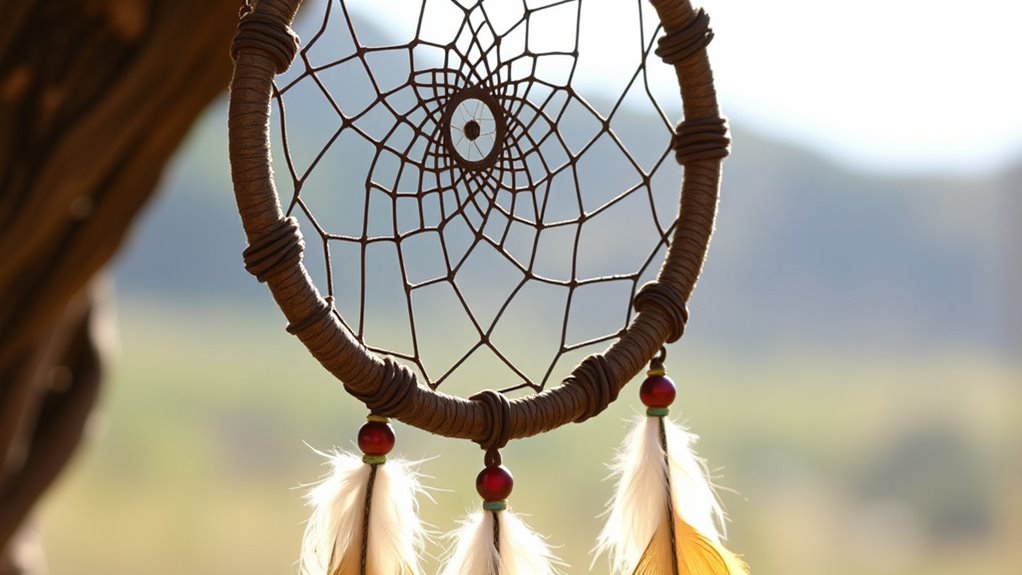
Creating a DIY Native American dreamcatcher is a meaningful way to bring a piece of Native tradition into your home. This handcrafted object isn’t just decorative; it holds deep symbolic significance rooted in Indigenous culture. Traditionally, dreamcatchers are believed to filter out bad dreams, allowing only good ones to pass through the web and into the sleeper’s mind. As you craft your dreamcatcher, understanding its symbolic meaning can deepen your appreciation for the process and the object itself. The web, often woven in a circular shape, represents the circle of life and the interconnectedness of all things. The feathers hanging from it are thought to guide positive dreams and messages to the sleeper, while beads or charms can symbolize different elements, spirits, or personal intentions. When you create your dreamcatcher, you’re participating in a tradition that honors these symbols and their meanings, making your craft more than just an art project—it’s a spiritual act.
Getting started with crafting techniques, you’ll want to focus on simplicity and respect for the cultural origins. Begin with a hoop, usually made of wood or metal, which forms the foundation of your dreamcatcher. Wrap the hoop tightly with leather or fabric strips, securing the base and adding a rustic look that reflects traditional methods. For the web, use a strong yet flexible material like sinew, thread, or thin yarn. Start by tying a knot at one point on the hoop, then weave in a circular pattern, looping around the hoop and creating a web that gradually becomes denser toward the center. Be mindful of tension; too tight, and the web might break, too loose, and it’ll look uneven. Incorporate beads into the web if you’d like to add personal or symbolic touches—these can represent spiritual guides, elements, or loved ones. Finish your dreamcatcher by attaching feathers to the bottom with string or leather strips, ensuring they hang freely. Some artisans also add charms or stones for additional symbolism or protection.
Additionally, understanding the cultural significance behind dreamcatchers helps ensure respectful creation and use. As you craft, respect the cultural significance behind each element and avoid commercializing or misappropriating the tradition. Your goal should be to honor the symbolism and techniques that give the dreamcatcher its cultural authenticity. Creating your own dreamcatcher allows you to connect with a rich history while making a meaningful piece for your space. With patience and mindfulness, your handmade dreamcatcher can serve as a beautiful reminder of protection, positive energy, and cultural respect—an authentic symbol of hope and tradition you’ve personally crafted.
Native American dreamcatcher craft kit
As an affiliate, we earn on qualifying purchases.
As an affiliate, we earn on qualifying purchases.
Frequently Asked Questions
Can I Make a Dreamcatcher Without Native American Cultural Knowledge?
You can make a dreamcatcher without native American cultural knowledge, but it’s important to be respectful and avoid cultural appropriation. Educate yourself about its significance and origins to guarantee your craft respects the culture. Focus on respectful crafting by honoring traditions and avoiding stereotypes. If you’re unsure, consider supporting Native artists or purchasing authentic pieces instead. This approach shows appreciation without misusing or trivializing cultural symbols.
What Are the Traditional Materials Used in Authentic Dreamcatchers?
Imagine weaving a piece of sacred earth into your hands. Traditional dreamcatchers often feature natural materials like delicate feathers, especially traditional feathers, which symbolize air and the spirits’ breath. You’ll also find natural beads that represent the spider’s web and harmony. Using these authentic materials connects you to the cultural roots and spiritual essence, creating a meaningful, genuine craft that honors the ancient traditions behind this beautiful symbol.
How Do Different Colors in Dreamcatchers Influence Their Meaning?
Different colors in dreamcatchers carry unique symbolism and emotional significance. For example, red often represents strength and courage, while blue symbolizes peace and tranquility. Green is associated with growth and harmony, and white signifies purity and protection. By choosing specific colors, you can personalize your dreamcatcher to reflect your intentions or emotional needs, making it a meaningful talisman that resonates with your inner feelings and spiritual goals.
Are There Specific Symbols or Patterns to Include for Protection?
Yes, you can include specific symbols or patterns for protection in your dreamcatcher. Use symbolic patterns like the spider web to represent interconnectedness and protective symbols such as feathers, especially owl or eagle feathers, to guard against harm. Incorporate protective symbols like the sun or moon to symbolize guidance and safety. These elements help enhance your dreamcatcher’s protective qualities, aligning with traditional meanings and ensuring it serves as a strong safeguard.
Is It Respectful to Craft and Display Dreamcatchers as a Non-Native Person?
Respectful craft and display of dreamcatchers start with cultural sensitivity and ethical considerations. As a non-native person, you should approach this craft with awareness, understanding it’s rooted in Native traditions. While creating one isn’t inherently disrespectful, it’s important to honor its cultural significance. Educate yourself, seek permission if possible, and avoid commercializing or misrepresenting its meaning. This shows respect and appreciation rather than cultural insensitivity.
wooden hoop dreamcatcher supplies
As an affiliate, we earn on qualifying purchases.
As an affiliate, we earn on qualifying purchases.
Conclusion
Creating your own Native American dreamcatcher isn’t just about crafting; it’s about weaving a piece of tradition into your life. As you hang it above your bed, let it be a guardian that catches bad dreams like a spider trapping its prey. Remember, each knot and feather carries meaning, making your dreamcatcher a personal talisman. So, embrace the process and let it serve as a beautiful reminder of hope, protection, and cultural respect.
natural sinew and thread for dreamcatchers
As an affiliate, we earn on qualifying purchases.
As an affiliate, we earn on qualifying purchases.
feathers and charms for dreamcatchers
As an affiliate, we earn on qualifying purchases.
As an affiliate, we earn on qualifying purchases.